
By Kieran Haslett-Moore
The term ‘real ale’ brings with it an obvious existential question. If this ale is real, what makes another unreal? The answer is, of course, nothing. The term was a piece of marketing propaganda by the Campaign for Real Ale (previously the Campaign for the Revitalisation of Ale) at a time when the traditional draught beer of Britain looked like it was about to become extinct. That piece of propaganda was incredibly effective as over 50 years later ‘real ale’ still edges out cask ale, cask conditioned ale or any other names one might use for British draught beer.
The beer in question is not a style of beer, of course, but a method of dispense. Rather than packaging beer in highly pressurised kegs, real ale is run into stainless steel casks (some wood does still persevere). This racking happens shortly after or even just before primary fermentation is complete and a secondary fermentation is allowed to take place with a light carbonation forming in the cask and then clarification happening in the pub cellar. The level of carbonation or “condition” is then controlled by allowing the cask to vent with arcanely named “spiles” , pieces of porous or nonporous wood and plastic that control the pressure in the head space of the cask. While any beer can be cask conditioned, the beers that grew out of this system of dispense are arguably the most suited to it. The gentle fruity earthy sociable ales of Britian, bitters, milds, stouts and golden ales seem to suit the form.
The clock is ticking
One of real ale’s major problems and also one of its major appeals is its short shelf-life. Once a cask is tapped, there is a finite amount of time till the air that passes into it as it is served spoils it. There are arguments over how long that really is. There are also devices that drip feed co2 into the cask instead of the air of the cellar. They are called breathers and are common and extend a cask's life. The reason that this problem is also an appeal is that the living beer is also best fresh so when on form, drinkers get to experience these beers at their peak.
So how to do it at home?
Point of dispense
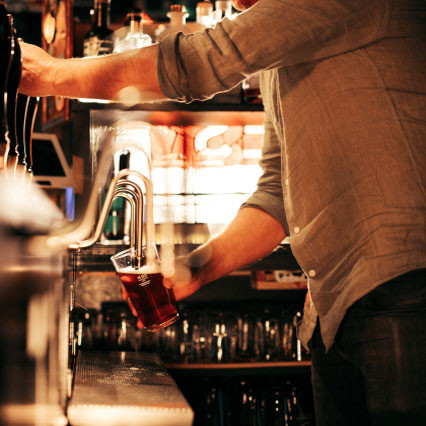
For many. real ale is all about the hand pull. The vast majority of real ale is now served by manually pumping beer up from the cask to the glass. These piston pumps go by the various names of ‘hand pull’, ‘hand pump’ or the steam punk-esque ‘beer engine’. Getting one of these isn’t easy. They do occasionally come up for sale on Trademe, or they can be imported at great expense with the polished wood bar top plate arousing MPI scrutiny. I talk from experience. Failing that BYO.com does have a how to guide to build one yourself. If you are of a hands-on persuasion, you could give that a go.
Hand pulls are not the be all and end all of real ale however. Particularly in the south of England, ale is often served straight from the cask via a tap. This is often called gravity dispense. Here the gentle condition in the beer is preserved so the beer has more carbonation and less frothy head. It is, in my opinion, one of the best ways to experience real ale. Last year I was lucky enough to enjoy an afternoon at The Bridge Inn Topsham where there are no ‘taps’ but instead an array of casks set in the cold stone side of the land lady’s parlour. There is also no bar and one orders either through a hatch from the public bar or in the doorway to the hallway. Serving beer this way at home is much less dependent on finding a beer engine for sale. Allowing beer to fall from a tap by gravity into a waiting pint glass in a cool garage is something many of us can arrange.
Container
In the British pub trade, the most common container is a stainless steel 40L cask called a firkin. There are an extensive range of cask sizes with wonderful names like kilderkin and hogshead. The smallest is called a pin at 20L and is about right for home use if you have a party or enthusiastic neighbours.
Here in NZ the more common container is the bag and box where a plastic bladder, like a large ‘goon bag’ or ‘wine cask’ sits inside a cardboard box. The downside to this set up is that carbonation can’t easily be controlled by venting as it has no spiles and the plastic bladder will pop if pressure gets too high. The positive is that without venting to the outside environment, there is less air ingress into the beer as you serve it, so in a home scenario you can enjoy your beer over a longer period before the beer goes off. Most handpull beer served from bladder in NZ is bright beer that hasn’t had a secondary fermentation occur in the bladder. However, that doesn’t have to be the case. I have devised a way of setting up bladders in cardboard boxes that have a hatch for the tap to pock through ten cm up from the bottom. This allows the sediment of a gentle refermentation to drop down where it won’t pass out the tap and clear beer to flow. I use 3L Caspak bladders which will yield 5 or 6 pints which I think is a feasible quantity of beer for domestic purposes.
If you are lucky enough to have a beer engine, you can also set up a corny keg to be a ‘cask’ This has the plus of having a pressure relief valve which can be used like a spile to control carbonation levels and an obvious way to displace the beer being served with co2. I have used this method in the past and I would give the keg a little ‘squirt’ of co2 from the regulator every couple of pints to replace the beer being pumped out.
The road to condition
There are two ways to get the condition in your real ale. The first is to let your beer ferment right out and then prime the beer heading into the container with some sugar solution to feed a secondary fermentation. The other is to run your beer into the container while it still has some points left to go. 1.015 is a commonly sited gravity to rack to cask. What works for you will very much depend on what set up you settle on. A cask or corny set up will allow venting and will handle the excess pressure if 1.015 turns out to generate too much condition. A bladder on the other hand might pop creating waste and mess.
Whichever way you go, handpull or gravity dispense, primed vessel or residual fermentation, once you get the process right for your needs, there is nothing quite as satisfying as being able to serve gloriously drinkable gentle complex pints in your own home.
Photo courtesy of CAMRA